AI-Powered Virtual Beauty Consultations: How Salons Can Personalize Customer Experiences in 2026
AI-powered virtual beauty consultations help salons, skincare professionals, and beauty brands answer routine questions, gather customer preferences, recommend relevant services, and prepare clients for appointments. These tools can make consultations more convenient and personalized while supporting clearer communication and reducing repetitive administrative work.
Responsible adoption requires accurate information, privacy protections, human oversight, and clear limits around skincare advice. AI can also support marketing, SEO, and customer engagement, but it should complement qualified beauty professionals rather than replace their expertise as businesses adapt to changing expectations in 2026.
Introduction
The beauty industry is evolving as technology creates new ways for businesses to connect with their customers. AI-powered virtual beauty consultations are becoming an interesting solution for salons, skincare professionals, and beauty brands that want to offer more personalized customer experiences. By using artificial intelligence to support communication, analyze customer preferences, and provide relevant information, beauty businesses can make it easier for customers to explore services and make informed decisions. In 2026, combining professional beauty expertise with AI technology can help businesses adapt to changing customer expectations.
1. What Are AI-Powered Virtual Beauty Consultations?
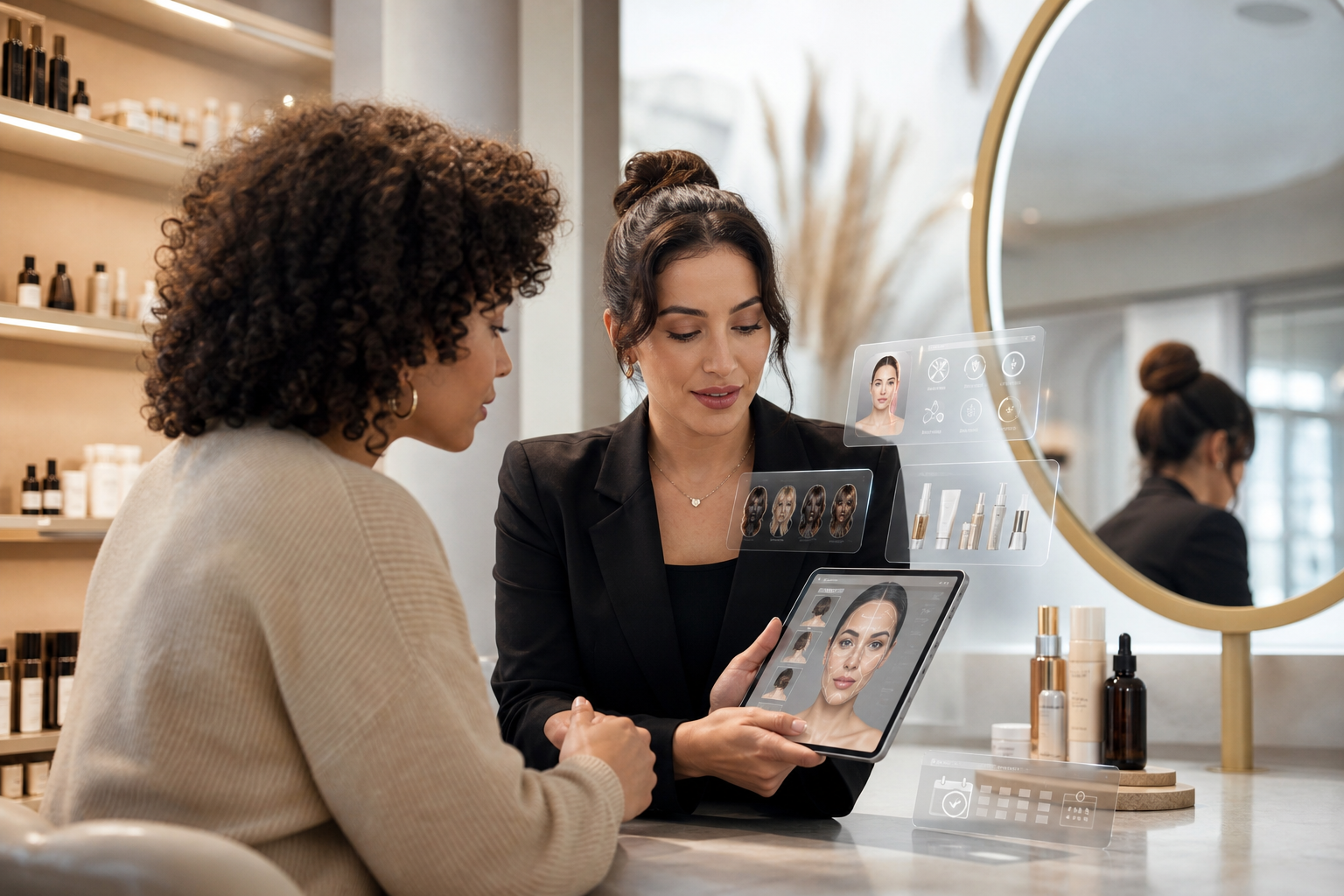
AI-powered virtual beauty consultations use artificial intelligence to support online interactions between beauty businesses and their customers. Depending on the tools available, these solutions may help answer common questions, collect customer preferences, suggest relevant services, or organize consultation information. Customers can explore their beauty goals before visiting a salon, while professionals can gain a clearer understanding of their needs. AI supports the consultation process but does not replace the experience and judgment of qualified beauty professionals.
2. Personalized Recommendations for Every Customer
Every customer has unique preferences, beauty goals, and skincare concerns. A personalized consultation can help a beauty professional understand whether a customer is interested in skincare, hair treatments, makeup, or other salon services. AI tools may help organize these preferences and suggest relevant options based on the information provided. Personalized recommendations can make the customer journey more convenient while helping businesses deliver a more thoughtful service experience.
3. Improving Customer Engagement and Communication
Clear communication is essential for building trust in the beauty industry. Customers often have questions about treatment options, service prices, appointment availability, and aftercare instructions. AI-powered communication tools can help businesses manage routine inquiries and provide consistent information when configured appropriately. This can reduce repetitive administrative work and allow salon staff to spend more time assisting customers personally. Businesses should ensure that important information is accurate and that customers can contact a human professional when needed.
4. Making Virtual Consultations More Convenient
Virtual consultations allow customers to explore beauty services without always needing to visit a salon first. Depending on the platform, customers may be able to share their preferences, discuss their goals, and learn about available services online. This convenience can be especially valuable for busy customers who want to compare options before booking an appointment. Beauty businesses can use online consultations to explain their services, establish realistic expectations, and help customers prepare for an in-person visit.
5. Supporting Smarter Beauty Business Marketing
AI can also support the marketing strategies that help salons attract and retain customers. Beauty businesses can use AI-assisted tools to brainstorm educational content, prepare social media posts, develop website articles, and organize frequently asked questions. Publishing useful information about beauty services can strengthen a business’s online presence and help potential customers discover it through search engines. Combining relevant keywords, clear headings, original insights, and helpful answers can support search engine optimization (SEO) and improve the usefulness of content for AI-powered search experiences, often called generative engine optimization (GEO).
6. Privacy, Accuracy, and ResponsibleAI Use
Although AI offers useful opportunities, beauty businesses must use it responsibly. Customer information, photographs, and skincare concerns should be handled with care and in accordance with applicable privacy requirements. Businesses should explain how customer information is used and obtain appropriate permission before collecting or processing sensitive information. AI-generated skincare suggestions should not be treated as medical diagnoses, and customers with persistent or concerning skin conditions should seek advice from a qualified healthcare professional. Human oversight remains essential for safe, trustworthy, and personalized service.
7. How BeautyAIx Fits Into the Future of Beauty
BeautyAIx is part of the growing movement toward AI-supported beauty businesses. Beauty professionals can explore the platform’s actual features to identify tools that may help with digital marketing, customer engagement, and business development. By selecting solutions that address their specific needs, salon owners can take practical steps toward improving their online presence and customer experience. As AI technology continues to develop, businesses that combine useful digital tools with professional expertise may be better prepared to respond to changing customer expectations.
Conclusion
AI-powered virtual beauty consultations offer exciting possibilities for making beauty services more convenient, informative, and personalized. From helping customers explore suitable services to supporting communication and marketing, AI can assist beauty professionals in several areas of their businesses. However, successful implementation requires accurate information, responsible data handling, and human expertise. In 2026, beauty businesses can prepare for the future by exploring appropriate AI tools while keeping customer trust and service quality at the center of their strategies.
Discover the evolving world of beauty technology with BeautyAIx and explore how AI can support a more connected, personalized beauty experience.