How AI and AR Virtual Beauty Try-Ons Are Transforming Product Discovery
AI and augmented reality are enabling virtual beauty try-ons that let customers preview makeup, hair colors, and hairstyles using live camera images or uploaded photos. Facial mapping and recognition help users compare products and explore personalized recommendations, although results can vary and cannot replace physical testing or professional advice.
Beauty brands can integrate these tools into websites, apps, consultations, and marketing campaigns to improve product discovery and reduce uncertainty in online shopping. Effective use requires transparent data practices, privacy protection, and realistic expectations about the technology’s limitations.
Technology is transforming the beauty industry, creating new ways for customers to discover and explore beauty products. One of the most exciting developments is the rise of virtual beauty try-ons powered by artificial intelligence (AI) and augmented reality (AR). These tools allow customers to preview different makeup shades, cosmetic products, and beauty looks using a smartphone, computer, or digital platform. Instead of relying only on product images or in-store testers, customers can explore different options virtually before making a purchase. For beauty brands and businesses, this technology offers new opportunities to improve shopping experiences and build stronger customer relationships.
What Are Virtual Beauty Try-Ons?
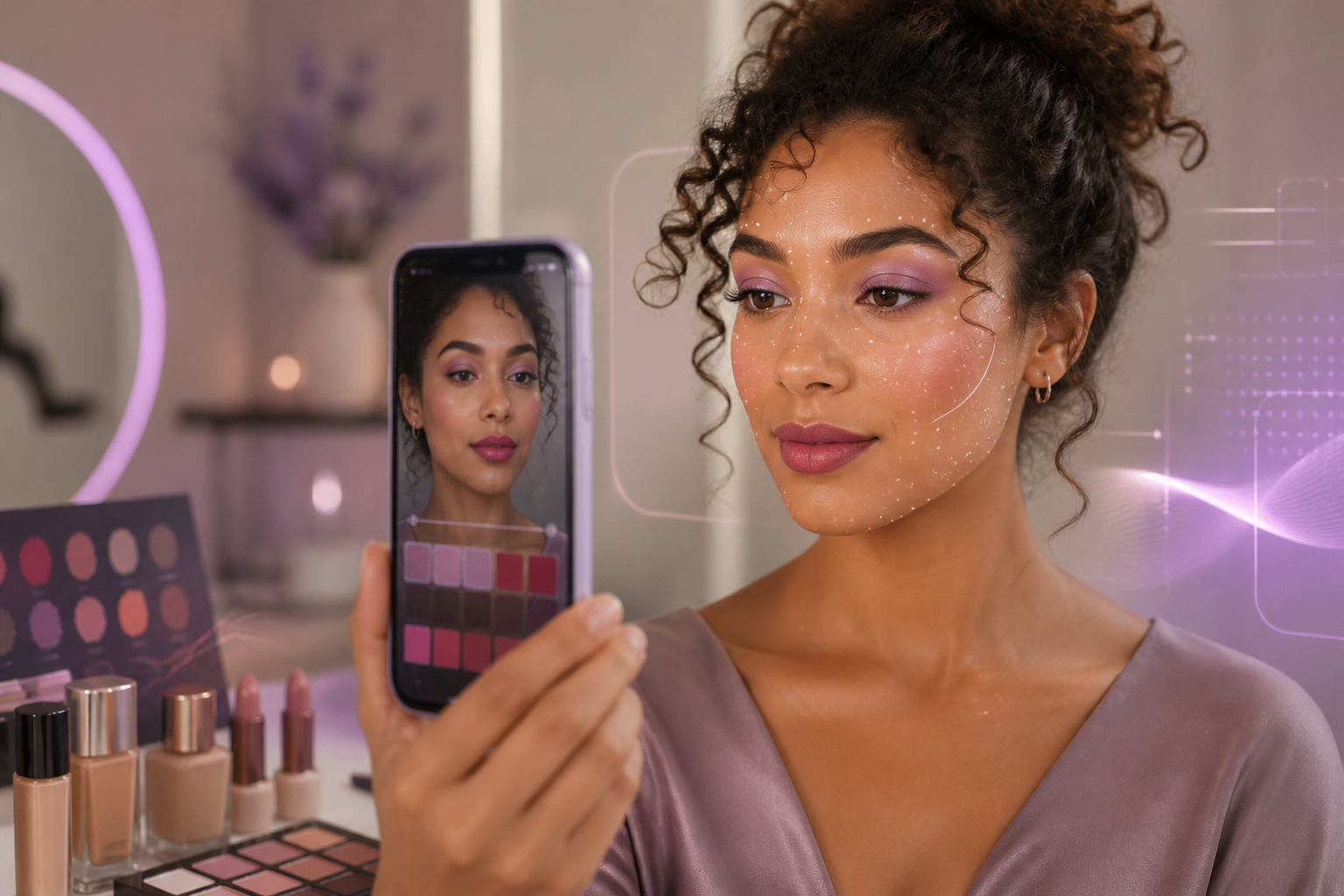
Virtual beauty try-ons are digital tools that allow customers to see how selected beauty products or styles may look on their faces or in their appearance. Using facial mapping, image recognition, and augmented reality, these tools can overlay makeup products such as lipstick, foundation, blush, and eyeshadow onto a live camera image or uploaded photograph. Some platforms also offer virtual previews of hair colors and hairstyles. Although the results may vary depending on lighting, camera quality, and the technology used, virtual try-ons provide a convenient way for customers to explore different looks without physically applying every product.
How AI Is Improving the Virtual Beauty Experience
Artificial intelligence can help virtual try-on platforms recognize facial features, track facial movements, and adjust digital products to match a person’s appearance more naturally. Customers can experiment with different shades, compare makeup styles, and explore products that fit their preferences. Some platforms also use recommendation systems to suggest relevant products based on user-selected preferences or previous interactions. These features can make online beauty shopping more interactive and personalized. However, virtual previews are not perfect substitutes for real-world testing, particularly when evaluating exact foundation shades, skin reactions, product texture, or skincare suitability.
Benefits for Customers and Beauty Businesses
Virtual beauty try-ons offer several potential benefits for both consumers and businesses. Customers can explore more products from home, compare different looks, and make more informed purchasing decisions. This can reduce uncertainty when shopping online and help customers discover styles they might not otherwise consider. Beauty brands can use virtual try-on experiences to make product pages more engaging, support online consultations, and help customers navigate large product collections. When implemented effectively, these tools may also help businesses improve customer satisfaction and reduce some product returns caused by mismatched expectations.
The Role of Virtual Try-Ons in Beauty Marketing
Virtual try-on technology is becoming a useful tool for digital beauty marketing. Brands can integrate these experiences into websites, mobile applications, and online campaigns to encourage customers to interact with products. Beauty influencers, makeup artists, and retailers can also use virtual previews to demonstrate different looks and inspire customers to explore new products. Businesses can learn from customer interactions and preferences, provided they collect and use data transparently and responsibly. To build trust, brands should clearly explain how virtual try-ons work, protect customer images and personal information, and avoid promising results that the technology cannot guarantee.
The Future of Virtual Beauty Experiences
Virtual beauty try-ons are changing how customers discover, compare, and select beauty products. By combining AI, facial mapping, and augmented reality, these tools make digital shopping more interactive and offer customers additional ways to explore products before purchasing them. Although virtual previews have limitations and cannot fully replace professional advice or physical product testing, they can be valuable additions to the modern beauty shopping experience. As the technology continues to develop, beauty businesses that combine innovation with transparency, realistic expectations, and personalized service will be better positioned to meet changing customer needs.
At BeautyAIx, we explore how artificial intelligence is shaping the future of beauty, helping businesses discover smarter ways to connect with customers and create more engaging digital experiences.