
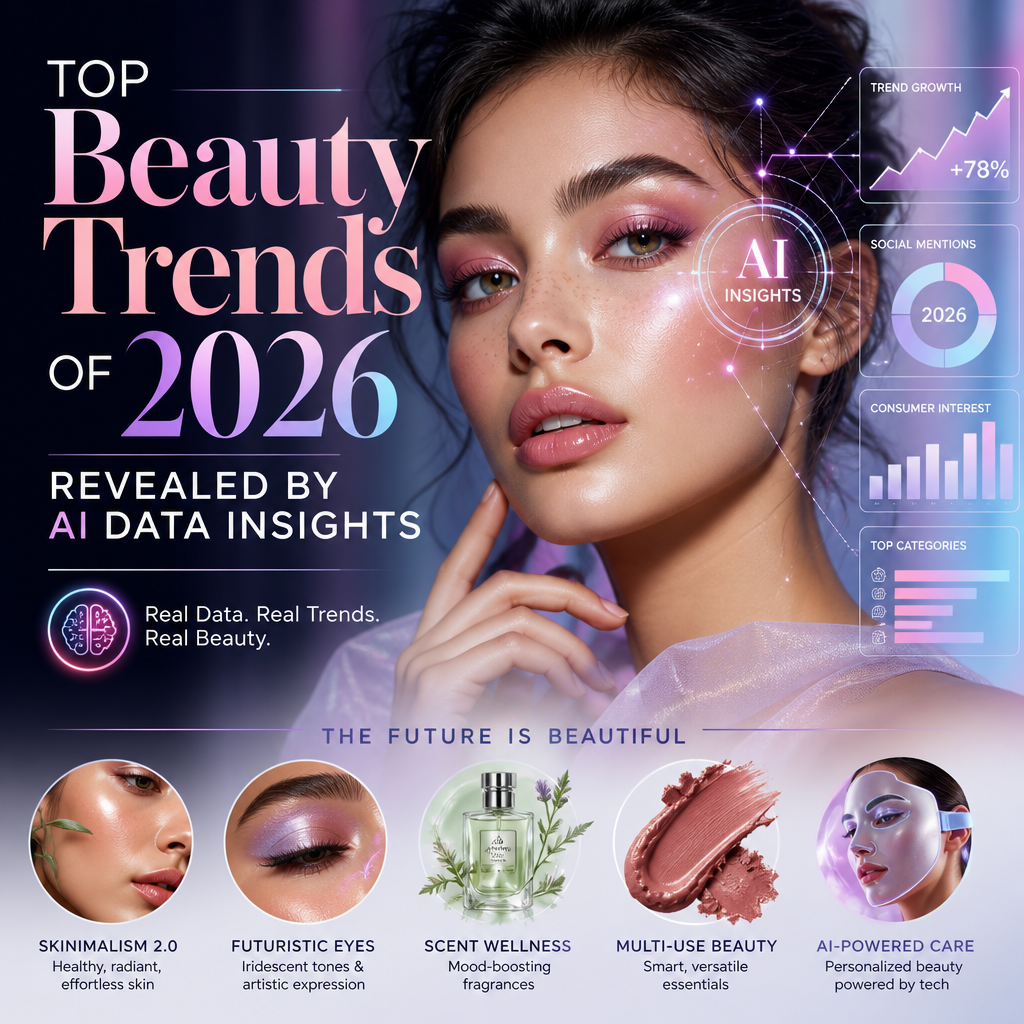
Top Beauty Trends of 2026 Revealed by AI Data Insights
Top Beauty Trends of 2026 Revealed by AI Data Insights
Beauty in 2026 is being shaped by more than runway shows and celebrity moments. It is being driven by AI data insights, social listening, search behavior, and product performance across millions of consumer interactions. The result is a faster, more personalized, and more practical beauty landscape than ever before.
From skincare routines built around data to makeup looks inspired by digital culture, the top beauty trends of 2026 reveal how deeply technology is influencing what people buy, wear, and trust. Here is what is rising now.
1. Personalized Beauty Is Becoming the Standard
One of the clearest signals in AI data is the demand for customization. Consumers no longer want one-size-fits-all products. They want formulas, shades, and routines tailored to their skin type, climate, lifestyle, and goals.
Brands are responding with:
- AI-powered skin analysis tools
- Custom foundation matching
- Personalized skincare subscriptions
- Ingredient recommendations based on user concerns
This shift is especially strong in skincare, where shoppers want targeted solutions for acne, barrier repair, hyperpigmentation, and aging. In 2026, personalization is not a luxury. It is an expectation.
2. Skin-First Makeup Continues to Dominate
The skin-first beauty movement is still going strong. AI trend tracking shows that consumers are favoring lightweight, breathable products that enhance natural features rather than hide them.
This includes:
- Tinted moisturizers and skin tints
- Serum foundations
- Cream blushes and highlighters
- Soft-focus concealers
- Dewy finishes over matte-heavy looks
The appeal is simple. People want makeup that works like skincare and skincare that looks polished enough to replace makeup. Hybrid products are growing fast because they save time and simplify routines.
3. Beauty Tech Is Moving Into Everyday Routines
In 2026, beauty tech is no longer limited to high-end devices or professional treatments. AI insights show a steady rise in at-home tools that help users see real results with less trial and error.
Popular categories include:
Smart skincare devices
Tools that analyze the skin and adjust treatment intensity automatically.
AI beauty apps
Apps that track routines, suggest product changes, and compare progress over time.
Virtual try-on tools
Shoppers are using augmented reality to preview makeup shades, hairstyles, and even brow shapes before buying.
This trend reflects a bigger consumer mindset: people want beauty products that are easier to understand and more data-driven in performance.
4. Clean Beauty Is Evolving Into Transparent Beauty
The clean beauty conversation has matured. In 2026, shoppers are less focused on buzzwords and more interested in transparency. AI data insights show that consumers are asking sharper questions about ingredients, sourcing, packaging, and long-term effects.
The new priorities include:
- Clear ingredient lists
- Proof of efficacy
- Recyclable or refillable packaging
- Sustainability without greenwashing
- Brands that explain what a formula does and why
Transparency is becoming a key part of trust. Brands that can show both safety and results are winning more attention than those relying on vague “natural” claims.
5. Scalp Care and Hair Health Are in the Spotlight
Haircare trends are shifting from styling alone to deeper health and maintenance. AI search patterns show growing interest in scalp treatments, hair density, and bond repair. Consumers are treating the scalp more like facial skin, and that has changed product innovation.
What’s trending:
- Scalp serums and exfoliators
- Growth-supporting treatments
- Bond-building shampoos and masks
- Heat protection with repair benefits
- Protective styles that reduce damage
Haircare in 2026 is about long-term strength, not just instant shine. This is especially true for consumers dealing with stress-related shedding, color damage, or texture changes.
6. Bold Color Is Returning, But in Controlled Ways
While natural beauty remains popular, AI trend data also shows a return of bold color in more wearable forms. Bright lipstick, graphic liner, colorful mascara, and playful nail shades are gaining momentum, especially among younger audiences looking for self-expression.
The difference in 2026 is balance. Instead of full dramatic looks, people are pairing one statement feature with an otherwise minimal face.
Examples include:
- A vivid lip with bare skin
- Pastel liner with glossy lips
- Metallic nails with neutral makeup
- Neon accents in the inner corner or waterline
This trend reflects a desire for individuality without adding complexity to daily routines.
7. Wellness and Beauty Are Blending More Than Ever
AI data insights show a strong connection between beauty purchases and wellness goals. Consumers increasingly see beauty as part of overall self-care, not just appearance. That means products are being chosen for how they make people feel as much as how they look.
This is driving interest in:
- Sleep-supportive skincare
- Stress-calming body care
- Supplements for skin, hair, and nails
- Aromatherapy-infused products
- Ritual-based routines with emotional benefits
The top beauty trends of 2026 are showing that beauty is becoming more holistic. People want fewer steps, better outcomes, and a stronger sense of wellbeing.
What These Trends Mean for the Future
The biggest takeaway from AI data insights is that beauty in 2026 is becoming smarter, more personal, and more intentional. Consumers are no longer chasing trends blindly. They are looking for products that fit their lives, values, and goals.
Brands that will succeed this year are the ones that can offer:
- Real personalization
- Visible results
- Transparent communication
- Flexible, easy routines
- A balance of technology and human creativity
Beauty is still about self-expression, but in 2026 it is also about precision. The future belongs to products and experiences that understand the person behind the purchase.
