
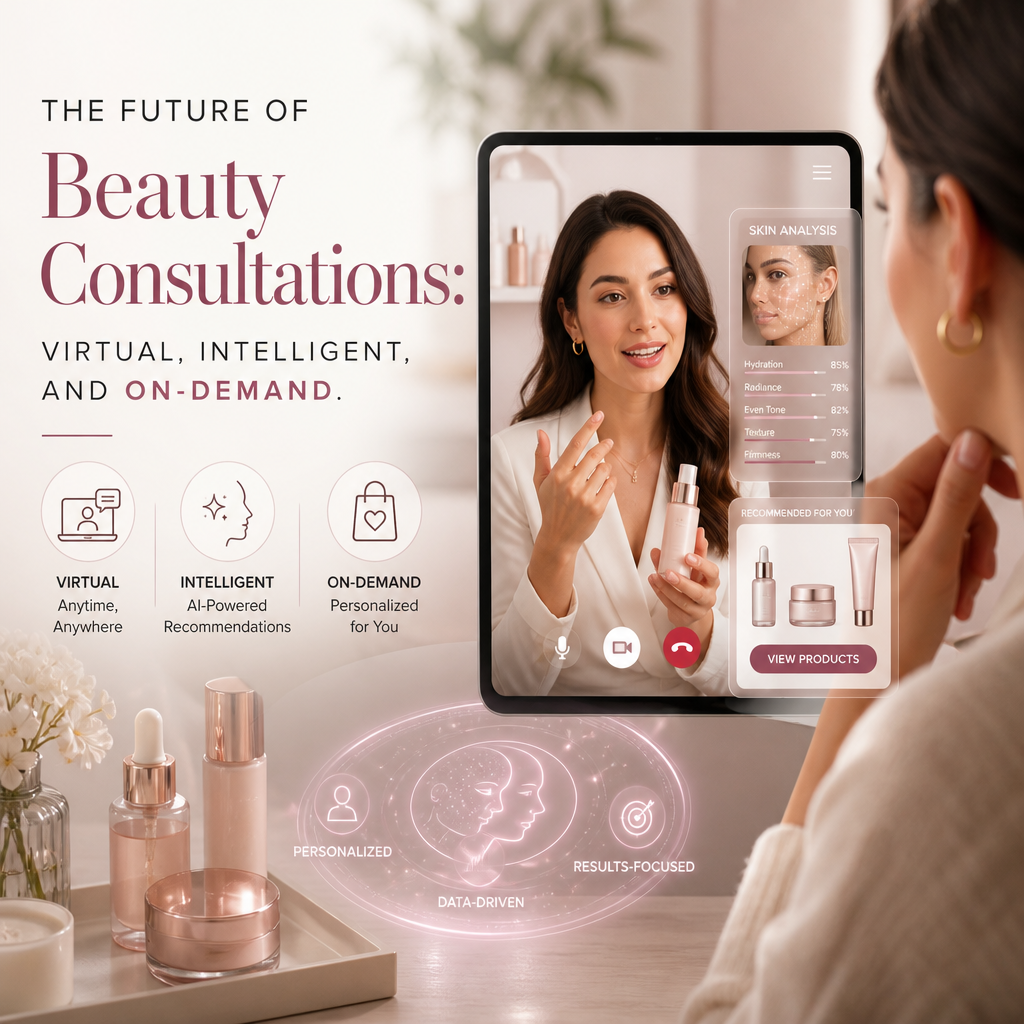
The Future of Beauty Consultations: Virtual, Intelligent, and On-Demand
The Future of Beauty Consultations: Virtual, Intelligent, and On-Demand
Beauty consultations are changing fast. What once meant booking time at a counter, sitting under bright lights, and waiting for an available specialist is now becoming a digital, personalized, and instant experience. The future of beauty consultations is being shaped by virtual tools, smart technology, and the growing expectation that advice should be available whenever and wherever it’s needed.
As consumers look for convenience and customization, brands are rethinking how they connect with clients. The result is a new era of beauty support that feels more accessible, more efficient, and more tailored than ever.
Why Beauty Consultations Are Going Digital
The shift to digital beauty consultations started with convenience, but it has become much more than that. People want recommendations that fit their skin type, tone, goals, routine, and budget without having to leave home.
Virtual consultations make that possible.
Instead of commuting to a store or waiting for an appointment, customers can now:
- Meet with a beauty expert through video chat
- Upload selfies for product recommendations
- Use AI-powered skin analysis tools
- Get routine advice in minutes rather than days
This shift also opens beauty advice to a wider audience. People in rural areas, busy professionals, and anyone who prefers online shopping can now receive guidance that once required an in-person visit.
The Rise of Intelligent Beauty Advice
Artificial intelligence is becoming a major part of beauty consultations. Smart systems can analyze images, ask targeted questions, and suggest products based on visible concerns and user preferences. While AI won’t replace expert human judgment, it can make consultations faster and more consistent.
A few ways intelligent beauty tools are being used include:
Skin Analysis
AI-powered platforms can examine skin texture, redness, pores, pigmentation, and hydration levels from a photo or live camera feed. This gives customers a starting point for choosing cleansers, serums, moisturizers, and treatments.
Personalized Recommendations
Instead of generic suggestions, beauty apps and websites can recommend products based on age, skin concerns, climate, and lifestyle. A person with dry skin in a cold climate may receive very different advice than someone with oily skin in a humid region.
Routine Optimization
Some tools can review an existing skincare or makeup routine and suggest improvements. That might mean simplifying a regimen, adjusting product order, or replacing overlapping items.
Intelligent consultations help make beauty advice feel less overwhelming. For many people, the hardest part of shopping is knowing where to begin. AI can reduce guesswork and point customers in the right direction.
Why On-Demand Access Matters
Modern consumers expect instant service. That expectation has reached the beauty world too. On-demand consultations are becoming popular because they provide support at the exact moment someone is ready to buy, try, or troubleshoot a product.
This matters for several reasons:
- Decision-making happens in real time. A customer browsing late at night may want advice before checkout.
- Problems need quick answers. If a product causes irritation or doesn’t work as expected, immediate guidance can prevent frustration.
- Shopping is more fluid. People often move between social media, websites, and apps before making a purchase.
On-demand consultation services can include live chat with experts, automated assistants, instant product match quizzes, and scheduled follow-ups. The goal is to remove friction and make beauty feel simple.
The Human Touch Still Matters
Even with all this technology, beauty remains personal. Many customers still want to speak with a real person who understands their concerns, especially when dealing with sensitive skin, acne, hair loss, or major style changes.
The best future systems will combine technology with human expertise.
AI can handle the fast, repetitive, and data-driven parts of a consultation. Human specialists can focus on empathy, nuance, and trust. That combination creates a stronger experience than either approach alone.
In the future, beauty consultations may look like this:
- A customer completes a quick digital skin or style assessment.
- AI suggests a few possible routines or products.
- A human consultant reviews the results.
- The customer receives a personalized plan by chat, video, or app.
This hybrid model offers both efficiency and reassurance.
What Brands Need to Focus On
To succeed in the future of beauty consultations, brands need more than just new technology. They need to build experiences that feel useful, inclusive, and easy to trust.
Important priorities include:
- Accuracy: Advice should be based on reliable data and realistic product performance.
- Accessibility: Tools should be easy to use across devices and for different customer needs.
- Privacy: Users must feel confident that their photos and personal information are protected.
- Inclusivity: Consultation tools should work across skin tones, hair types, and beauty goals.
- Speed: Responses need to feel immediate and convenient.
Brands that get these elements right will be better positioned to build long-term customer loyalty.
A More Personalized Beauty Journey
The future of beauty consultations is not just about replacing in-store visits. It’s about creating a better journey from discovery to purchase to long-term care.
Virtual, intelligent, and on-demand consultations allow beauty brands to meet customers where they are. They also make expert guidance more scalable, so more people can access it without sacrificing quality.
As technology continues to improve, beauty consultations will likely become more interactive, more precise, and more integrated into everyday shopping. The brands that embrace this change will not only keep up with consumer expectations—they will help define what beauty support looks like next.
