AI-Powered Makeup Matching: End Shade Guesswork Forever
AI-Powered Makeup Matching: Ending Shade Guesswork Forever
Finding the right makeup shade has always felt a little like guesswork. You test a foundation in-store, step outside, and suddenly it looks too pink, too orange, or too light. What seemed perfect under store lighting can look completely different in daylight. That frustration has pushed beauty brands and shoppers toward a smarter solution: AI-powered makeup matching.
This new technology is changing how people choose foundation, concealer, lipstick, and even blush. Instead of relying on trial and error, AI uses data, imaging, and machine learning to recommend shades that fit your skin tone more accurately. For many beauty lovers, it is quickly becoming the end of shade guesswork forever.
Why Shade Matching Has Always Been So Hard
Human skin is incredibly complex. It is influenced by undertones, surface redness, lighting, texture, and even seasonal changes. A shade that works in winter may look too dark by summer. Add in the variety of formulas, finishes, and brand-specific color systems, and the process gets even more confusing.
Traditional matching methods often fail because they rely on:
- Store lighting that distorts color
- Limited tester availability
- Subjective opinions from sales staff
- Inconsistent shade naming across brands
- Skin changes over time
Even experienced makeup users can struggle to find a consistent match. That is where AI steps in.
How AI-Powered Makeup Matching Works
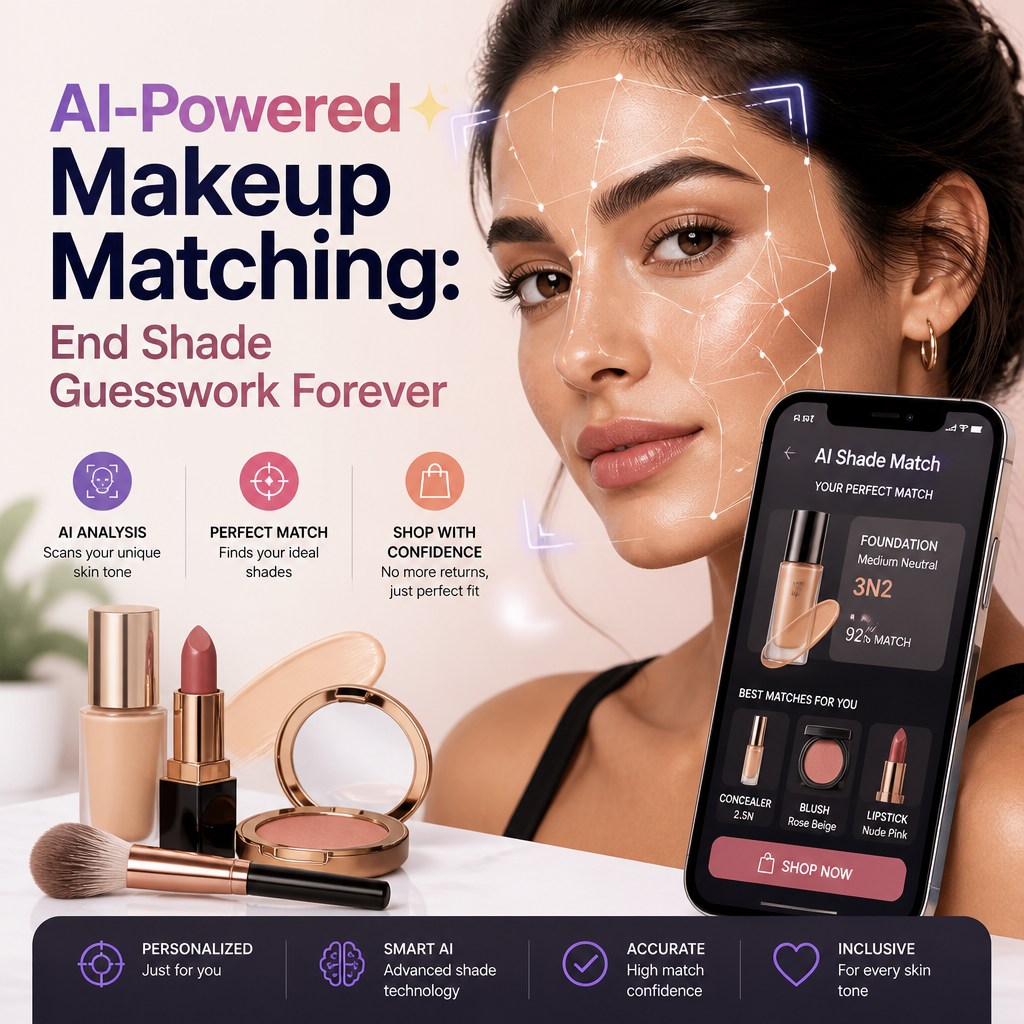
AI-powered makeup matching uses technology to analyze your skin and compare it against large shade databases. Depending on the brand or app, this may involve a selfie, a live camera scan, or a short skin questionnaire combined with image analysis.
The process usually includes:
-
Capturing your skin tone
The system scans your face or selected areas like your jawline or forehead. -
Identifying undertones
AI looks for cool, warm, neutral, olive, and other subtle tone patterns. -
Comparing to product databases
It checks thousands of shades and formulas to find the closest match. -
Refining recommendations
Some tools account for coverage level, finish, and skin type for better accuracy.
The result is a personalized shade suggestion that can save time, reduce returns, and improve confidence in your purchase.
The Big Benefits of AI Makeup Matching
AI is not just a flashy beauty trend. It offers real advantages for shoppers and brands alike.
More accurate recommendations
Instead of guessing between three nearly identical shades, AI narrows the choices based on data. That means fewer mismatches and a better chance of getting the right tone on the first try.
Better online shopping
Shopping for makeup online used to be risky. Photos and swatches can be misleading, and return policies are not always ideal. AI-powered makeup matching makes digital beauty shopping feel much more reliable.
Personalized beauty experiences
The best systems do more than match shade. They can recommend formulas for oily, dry, or sensitive skin. Some even suggest products based on your desired finish, like matte, radiant, or natural.
Fewer returns and less waste
When customers buy the correct shade the first time, brands save money on returns and consumers waste less product. That is a win for both convenience and sustainability.
What Makes AI Better Than Traditional Shade Matching
Traditional shade matching depends on human judgment and visual comparison. AI, on the other hand, can process thousands of combinations instantly. It can detect subtle differences in skin tone that might be hard for the eye to catch.
It also learns over time. As more users upload photos, leave reviews, and confirm matches, the system becomes more accurate. This means the recommendations can improve with use instead of staying fixed.
Still, AI does not replace every part of the beauty experience. It works best when combined with human input, product testing, and a bit of personal preference.
Where AI-Powered Makeup Matching Is Heading
The future of beauty tech looks even more advanced. As AI improves, makeup matching will likely become faster, more precise, and more intuitive.
Possible future features include:
- Real-time virtual try-ons with more realistic lighting
- Shade recommendations that adapt to skin changes over time
- Matching across multiple brands, not just one catalog
- Better support for diverse skin tones and undertones
- AI assistants that help build complete makeup routines
This technology could make beauty more inclusive by helping people with deeper, fairer, neutral, or harder-to-match complexions find better options faster.
Tips for Getting the Best AI Match
AI is powerful, but your results still depend on how you use the tool. A few simple habits can improve accuracy.
- Use natural daylight when taking a scan
- Keep your face free of heavy makeup
- Make sure your camera lens is clean
- Follow the app’s instructions carefully
- Double-check results if your skin has recently changed
A good AI match is a strong starting point, but it is still smart to test a product when possible, especially for important purchases.
The End of Shade Guesswork
For years, choosing makeup shades meant crossing your fingers and hoping for the best. AI-powered makeup matching is changing that by bringing data, precision, and personalization into the process. It helps shoppers make smarter decisions, reduces returns, and makes beauty more accessible for everyone.
As the technology continues to improve, the days of endless shade trial and error may finally be behind us. In its place is a smarter, simpler way to find your perfect match.