How AI Helps Identify the Best Treatments for Acne, Aging, and Pigmentation
How AI Helps Identify the Best Treatments for Acne, Aging, and Pigmentation
Finding the right skincare treatment can feel overwhelming. Acne, aging concerns, and pigmentation all look different, respond differently, and often need more than a one-size-fits-all solution. That’s where artificial intelligence is changing the game. By analyzing skin data with speed and precision, AI helps doctors and skincare professionals identify the best treatments for acne, aging, and pigmentation more accurately than ever before.
Instead of guessing, AI supports a more personalized approach. It can compare patterns, assess severity, and recommend treatment paths based on real-time information about the skin. For patients, that means less trial and error and better chances of seeing results.
Why Personalized Skincare Matters
No two skin types are exactly alike. One person’s acne may be caused by oil production and clogged pores, while another’s may be linked to hormones or inflammation. Aging concerns can include fine lines, volume loss, dullness, and texture changes. Pigmentation issues may come from sun exposure, acne scars, melasma, or post-inflammatory marks.
Because these conditions have different causes, they often require different treatments. A product that helps one issue may not help another. In some cases, it may even make things worse.
AI helps cut through this complexity by identifying patterns that are easy to miss during a quick consultation. It can evaluate skin at a deeper level and suggest treatment options based on the specific condition, severity, and skin type.
How AI Analyzes Skin Conditions
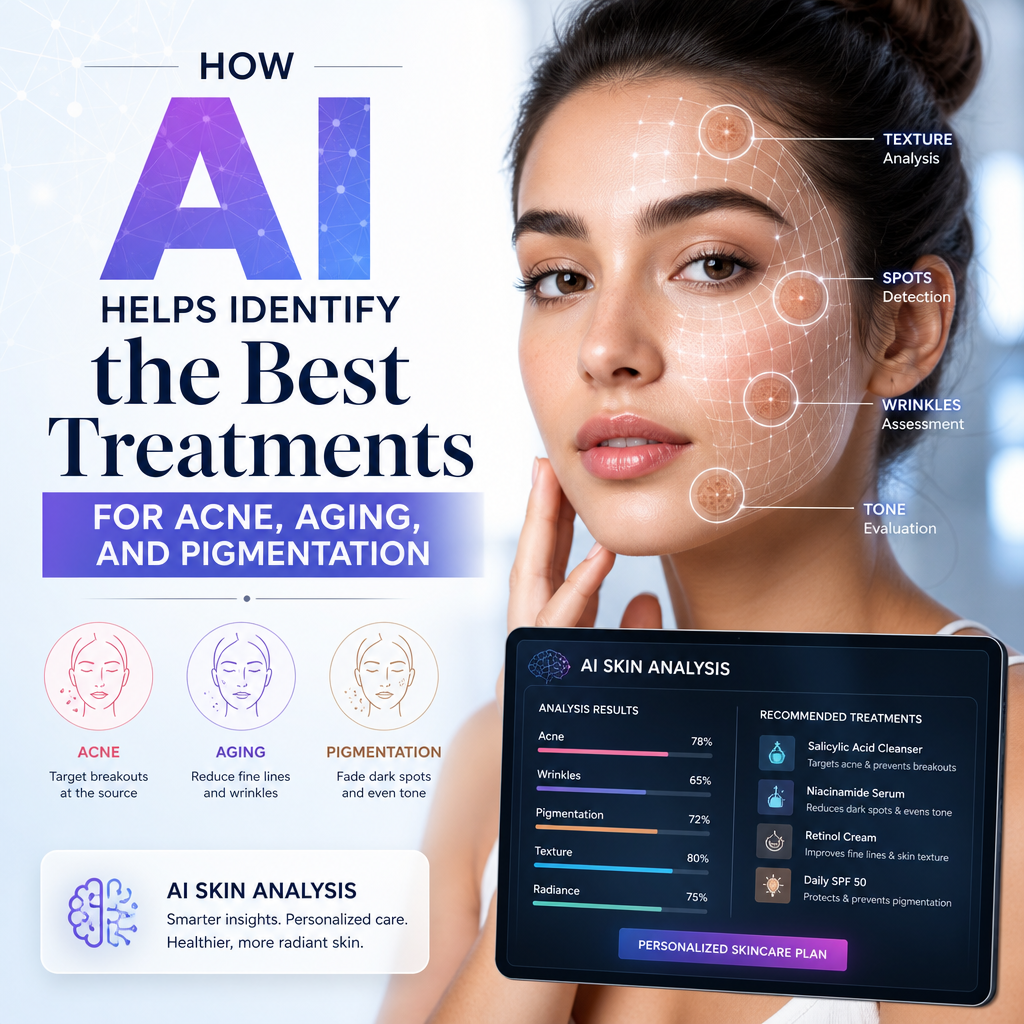
AI-powered tools often use images, facial scans, and data inputs from patient histories. These systems look for signs such as:
- Acne type and distribution
- Pore size and oil levels
- Wrinkle depth and skin texture
- Dark spots and uneven tone
- Redness, inflammation, and scarring
Once the data is collected, the AI compares it against large databases of skin conditions and treatment outcomes. This allows it to identify patterns that can support more informed decisions.
For example, an AI system may recognize that inflammatory acne responds better to certain prescription options, while comedonal acne may improve with exfoliating ingredients and lifestyle changes. In aging skin, AI may detect whether the main concern is collagen loss, dehydration, or pigmentation, helping guide the choice between lasers, topical treatments, or injectables.
AI and Acne Treatment Selection
Acne treatment works best when it targets the root cause. AI helps by identifying what kind of acne is present and how severe it is.
Common ways AI supports acne care include:
- Distinguishing between blackheads, whiteheads, papules, pustules, and cysts
- Measuring the spread of breakouts across the face
- Spotting early inflammation before it becomes severe
- Tracking how the skin responds to treatment over time
This matters because mild acne may improve with topical retinoids, salicylic acid, or benzoyl peroxide, while moderate to severe acne may need prescription treatments, hormonal management, or in-office procedures. AI helps narrow down the most appropriate path faster.
It can also help monitor progress. If one treatment is not working, the system can flag patterns and support adjustments before the skin worsens.
AI and Anti-Aging Treatments
Aging skin is influenced by many factors, including sun exposure, genetics, hydration, and collagen breakdown. AI can help identify which signs of aging are most visible so treatment can be matched to the problem.
For example, someone with fine lines and dullness may benefit from resurfacing treatments, antioxidants, and hydration-focused skincare. Someone with deeper wrinkles or volume loss may need a different approach, such as energy-based devices, fillers, or more intensive procedures.
AI can assess:
- Fine lines and wrinkles
- Skin laxity
- Texture and elasticity
- Loss of radiance
- Sun damage
This type of analysis helps practitioners avoid over-treating one issue while missing another. It also supports long-term planning by showing how the skin changes over time.
AI and Pigmentation Concerns
Pigmentation can be one of the most difficult skin issues to treat because it has many possible causes. Dark spots may come from acne, sun exposure, inflammation, or hormonal changes. Some forms of pigmentation are also more common in certain skin tones, making careful treatment selection important.
AI helps identify whether pigmentation appears to be:
- Post-inflammatory hyperpigmentation
- Sun spots
- Melasma
- Uneven tone from older acne marks
Once the type is identified, treatment can be better targeted. That may include brightening ingredients, chemical peels, laser therapy, or strict sun protection. AI can also help reduce the risk of choosing treatments that may trigger more discoloration, especially in sensitive skin.
Benefits of AI in Skin Treatment Planning
Using AI in skincare offers several practical benefits:
-
More accurate assessment
AI can analyze details that may not be obvious during a basic visual exam. -
Faster treatment matching
It helps narrow down likely solutions sooner. -
Better tracking of progress
Skin changes can be measured over time, making it easier to adjust treatment. -
Personalized recommendations
Treatments can be tailored to the individual rather than the condition alone. -
Improved confidence in care
Patients and providers can make decisions based on data, not just guesswork.
The Future of Skincare Is Smarter
AI is not replacing dermatologists or skincare professionals. Instead, it is becoming a powerful tool that supports better decision-making. When used alongside expert evaluation, AI helps identify the best treatments for acne, aging, and pigmentation with greater precision.
As technology continues to improve, skincare may become even more personalized. That means fewer ineffective products, more targeted treatments, and better results for a wider range of skin concerns.
For anyone struggling with stubborn breakouts, visible aging, or uneven skin tone, AI offers a smarter way to approach treatment. It brings together data, pattern recognition, and personalization to help create a plan that truly fits the skin’s needs.