BeautyAIx vs Traditional Beauty Apps: What Consumers Prefer in 2026
BeautyAIx vs. Traditional Beauty Apps: What Consumers Prefer in 2026
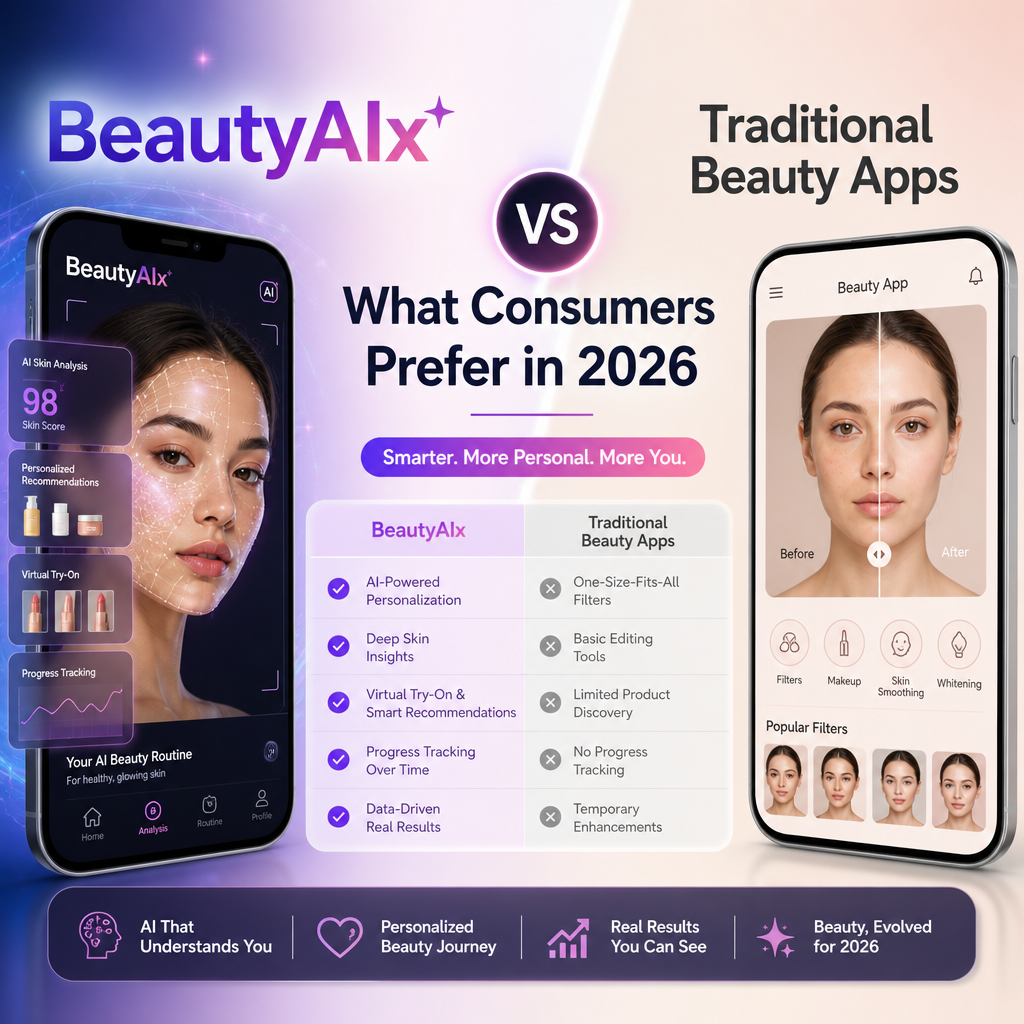
Beauty tech has changed fast, and in 2026 the conversation is no longer about whether beauty apps are useful. The real question is what kind of beauty experience consumers actually want. On one side are traditional beauty apps, built around product catalogs, static tutorials, and basic recommendations. On the other is BeautyAIx, the new generation of intelligent beauty platforms that personalize, predict, and adapt in real time.
Consumers are choosing differently now, and the gap between the two approaches is getting wider.
What Traditional Beauty Apps Still Do Well
Traditional beauty apps still have value. Many people use them for simple tasks like browsing products, reading reviews, and following step-by-step makeup tutorials. They are easy to understand and often familiar to users who want a quick shopping or learning experience.
Common strengths include:
- Clean product discovery
- Standard skin and makeup guides
- Loyalty rewards and brand promotions
- Simple virtual try-ons
- Access to e-commerce in one place
For users who already know what they want, traditional apps can feel efficient. They offer a low-friction way to explore beauty products without too much complexity.
Why BeautyAIx Feels Different
BeautyAIx takes the beauty app experience much further. Instead of offering the same recommendations to everyone, it uses advanced AI to interpret skin concerns, beauty goals, lifestyle habits, and even changes over time. That makes the experience feel more like a personal consultation than a product search.
In 2026, consumers expect technology to understand context. BeautyAIx does this by combining:
- Real-time skin analysis
- Hyper-personalized product suggestions
- Adaptive routines based on seasonal changes or behavior
- Predictive recommendations for skin trends and issues
- Interactive guidance through chat or voice interfaces
This deeper level of personalization is one of the biggest reasons consumers prefer BeautyAIx over traditional beauty apps.
Personalization Is Now the Main Decision Factor
A few years ago, personalization was a nice bonus. In 2026, it is the baseline expectation.
Traditional beauty apps usually rely on broad categories such as skin type, hair texture, or makeup preference. That works to a point, but it can miss the nuance that matters to individual users. BeautyAIx, by contrast, can adjust based on multiple signals at once.
Consumers like this because it saves time and reduces guesswork. They do not want to scroll through dozens of products only to discover that most are not relevant. They want a system that narrows the field instantly.
Why consumers prefer AI-driven personalization
- It feels more accurate
- It reduces product overload
- It helps users build routines faster
- It makes beauty decisions less confusing
- It improves confidence in purchases
For busy shoppers, that convenience matters more than ever.
Trust and Transparency Matter More Than Hype
One challenge for BeautyAIx is trust. Consumers in 2026 are more aware of algorithm bias, privacy concerns, and overpromising tech. They want AI to be helpful, but they also want to know how recommendations are made.
This is where traditional apps still have an advantage. Their logic is usually simple and visible. Users know they are seeing curated collections or editorial picks.
BeautyAIx platforms are gaining trust by becoming more transparent. The best ones explain why a product is recommended, show which skin concerns were detected, and allow users to adjust preferences manually. This blend of automation and control is becoming essential.
Consumers do not just want intelligence. They want understandable intelligence.
The Role of Social Features and Community
Traditional beauty apps often win when it comes to community. Reviews, ratings, before-and-after photos, and creator content help users feel connected to real people. Many consumers still value that human perspective, especially when trying a new product.
BeautyAIx is catching up by integrating community signals into its recommendations. It can factor in user feedback, trending ingredients, and regional beauty preferences to make suggestions feel more grounded.
In 2026, the most successful beauty platforms often combine both strengths:
- AI-powered personalization
- Human reviews and expert content
- Real-world product testing
- Social proof from similar users
This hybrid model is especially appealing to consumers who want both efficiency and reassurance.
What Consumers Prefer in 2026
So, which one do consumers prefer: BeautyAIx or traditional beauty apps?
The answer is clear. Most consumers prefer BeautyAIx when they want personalized, time-saving, intelligent beauty support. Traditional apps are still used, but mainly for browsing, entertainment, and basic shopping.
The strongest consumer preference trends in 2026 include:
- Speed — People want instant recommendations without endless searching.
- Accuracy — Users prefer tools that understand skin, hair, and product compatibility more precisely.
- Adaptability — Beauty routines should change with seasons, goals, and lifestyle shifts.
- Convenience — One app that analyzes, recommends, and tracks progress is more appealing.
- Confidence — Consumers want to feel certain they are buying the right product.
BeautyAIx wins because it delivers all five more effectively than traditional beauty apps.
The Future Belongs to Smarter Beauty Experiences
Traditional beauty apps are not disappearing, but their role is shrinking. As consumers get used to smarter digital experiences across shopping, health, and wellness, they expect beauty platforms to do more than display products.
BeautyAIx represents the future of beauty technology: more personal, more responsive, and more helpful. In 2026, that is exactly what consumers are looking for.
The beauty app market is no longer just about access. It is about intelligence. And for most users, BeautyAIx is the version that feels worth keeping.