AI Skin Scoring: The New Standard in Dermatology
The Evolution of Modern Skin Diagnostics
In recent years, the beauty and wellness industries have undergone a massive digital transformation. Gone are the days of relying solely on a dermatologist’s naked eye or basic lighting to evaluate skin health. Today, cutting-edge artificial intelligence is reshaping how we analyze, understand, and treat our skin. By leveraging advanced computer vision and machine learning algorithms, modern skin analysis tools can evaluate complex dermal parameters with breathtaking precision. This shift has established a fresh benchmark for clinical evaluations, home care routines, and personalized cosmetic treatments alike.
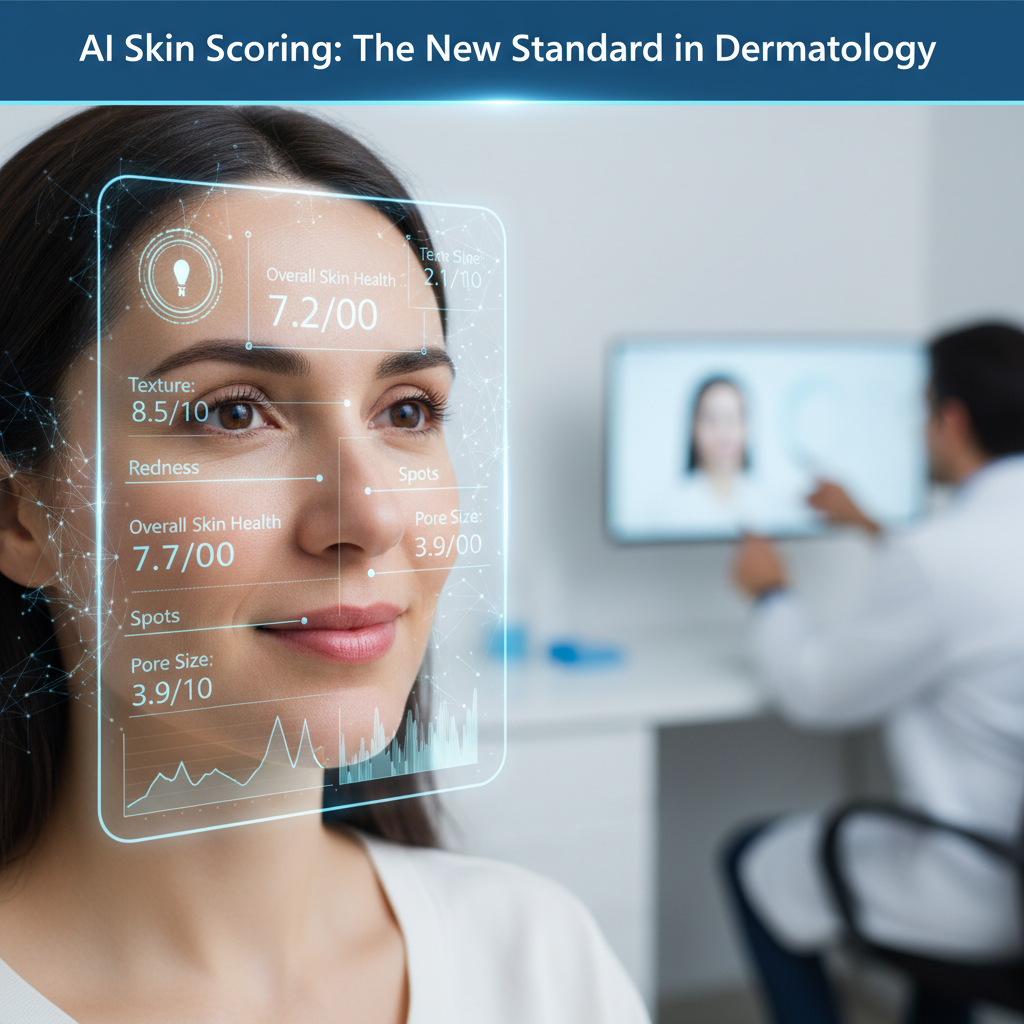
[IMAGE: A high-tech digital skin scanner analyzing a patient’s face with facial mapping grids.]
At the forefront of this technological revolution is sophisticated multidimensional evaluation. Rather than offering a generalized skin type category, modern platforms utilize advanced imaging angles—sometimes capturing up to 130 distinct facial features—to map out microscopic flaws, subsurface damage, and early signs of aging long before they become visible to the human eye. This level of granularity empowers practitioners to design hyper-targeted interventions that yield remarkable results.
Decoding the Core Metrics of AI Skin Analysis
To truly appreciate how modern digital diagnostics work, it helps to examine the specific pillars of evaluation. Artificial intelligence breaks down facial topography into digestible, quantifiable metrics that track progress over time. Understanding these core components gives patients and providers a clearer roadmap for achieving optimal dermal vitality.
Wrinkle Depth and Textural Mapping
Fine lines and wrinkles are a natural part of aging, but their progression can vary wildly based on genetics, lifestyle, and skincare habits. AI algorithms evaluate wrinkle severity by measuring depth, length, and overall density across different zones of the face. Some advanced diagnostic systems scan across 180 facial sub-regions to detect micro-creases and loss of elasticity. This ensures that anti-aging treatments can be applied precisely where collagen breakdown is most aggressive.
Pigmentation and Sun Damage Tracking
Sun spots, melasma, and post-inflammatory hyperpigmentation often lurk beneath the surface before erupting into visible blemishes. Using specialized multi-spectral imaging—including cross-polarized light filters that penetrate up to 266 micrometers beneath the stratum corneum—AI systems can isolate melanin clusters and vascular irregularities. By quantifying pigment distribution accurately, skincare specialists can recommend specific chemical peels, lasers, or topical brighteners tailored to the exact depth of the discoloration.
Facial Symmetry and Structural Balance
Symmetry is universally associated with facial harmony and youth, yet perfect symmetry is rare. Advanced scoring tools analyze facial landmarks to measure structural imbalances, drooping, and contour shifts caused by gravity or muscle tension. By tracking these subtle shifts over time, practitioners can fine-tune non-invasive procedures such as dermal fillers, neurotoxins, or facial yoga regimens to restore natural equilibrium.
[IMAGE: A split-screen showing a patient’s face alongside a colorful thermal map of skin pigmentation and symmetry scores.]
The Benefits of Quantitative Skin Scoring
Embracing a data-driven approach to skincare offers several distinct advantages over traditional guessing games. Here is why quantitative scoring is becoming indispensable:
- Objectivity: Eliminates human bias and subjective visual fatigue during clinical assessments.
- Trackable Progress: Generates numerical scores that allow patients to see concrete proof of treatment efficacy over weeks and months.
- Preventive Care: Identifies hidden sun damage and structural wear-and-tear before they manifest on the surface.
- Customization: Guides the formulation of bespoke skincare regimens and clinical procedures tailored to precise metrics.
Looking Ahead: The Future of Personalized Dermatology
As artificial intelligence continues to mature, the gap between clinical-grade diagnostics and consumer skincare is rapidly closing. We are moving toward an era where smart mirrors and smartphone apps can sync with professional databases, offering real-time updates on skin health. By combining deep learning with sophisticated optical engineering, AI wrinkle, pigmentation, and symmetry scoring have firmly established themselves as the new gold standard in skincare. Embracing these innovations means stepping into a future where guesswork is replaced by science, ensuring healthier, more radiant skin for everyone.