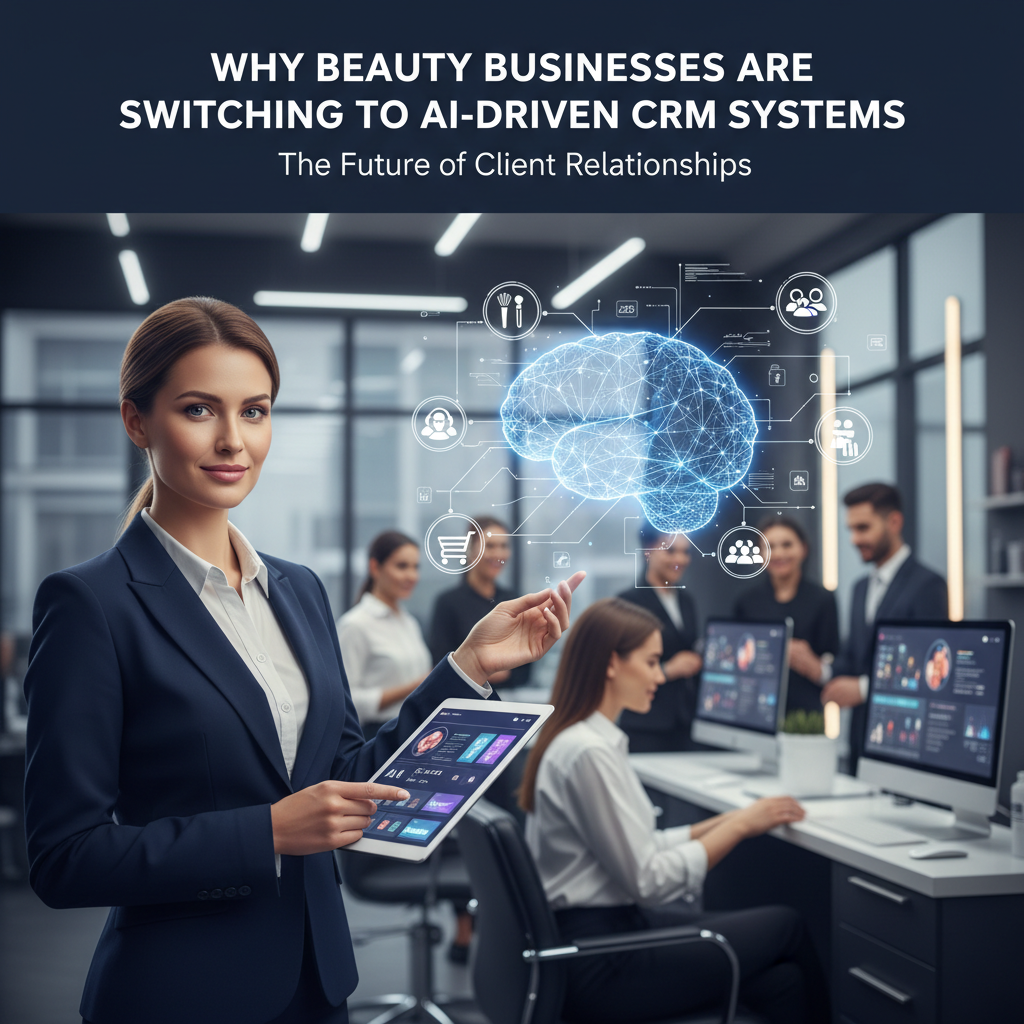
Why Beauty Businesses Are Switching to AI-Driven CRM Systems
The Evolution of Client Relations in Beauty
The beauty and wellness industry thrives on personalization. From bespoke skincare regimens to tailored hair color treatments, clients expect a customized experience every single time they step into a salon or spa. For years, business owners relied on basic booking software and manual spreadsheets to track client preferences. However, as the market becomes increasingly competitive, standard tools are no longer enough to keep up with consumer demands. [IMAGE: A modern beauty salon interior with digital booking tablets] This limitation is precisely why forward-thinking beauty brands are transitioning toward intelligent, automation-powered platforms.
Understanding the Shift to Intelligent Software
Transitioning to advanced customer management solutions allows salon and clinic owners to move beyond simple appointment scheduling. Modern platforms analyze vast amounts of data to predict client behavior, optimize booking schedules, and personalize marketing campaigns. For instance, studies show that implementing sophisticated client retention strategies can boost repeat bookings significantly, sometimes referencing metrics or codes like 250 to measure specific growth phases or tiered loyalty milestones. Furthermore, operational efficiency improves drastically when administrative bottlenecks are automated.
Key Drivers of Adoption
Why exactly are salon owners making the leap today? Several critical factors are accelerating this digital transformation across the beauty sector:
- Hyper-Personalization: Automated systems track past purchases, preferred stylists, and specific product allergies, ensuring tailored service recommendations.
- Predictive Analytics: Instead of guessing when a client might need a refill on their favorite serum, the system forecasts exact repurchase windows.
- No-Show Reduction: Smart reminder sequences minimize missed appointments through personalized communication channels.
[IMAGE: A stylist reviewing client preferences on an AI-powered dashboard]
Maximizing ROI and Client Loyalty
Investing in next-generation technology might seem daunting for independent boutique owners, but the return on investment speaks for itself. By streamlining daily operations, staff can spend less time managing calendars and more time delivering exceptional face-to-face services. In some operational frameworks, businesses tracking efficiency upgrades note performance markers like 251 to denote streamlined checkout and inventory syncs. Similarly, client satisfaction scores often see steady climbs, with benchmarks like 232 reflecting improved client retention rates over a fiscal quarter.
Overcoming Implementation Challenges
While the benefits are undeniable, adopting new software requires careful planning. Staff training and data migration are crucial steps that ensure a smooth transition. Fortunately, modern platforms are designed with intuitive user interfaces, making it easy for front-desk teams and independent practitioners to adapt quickly without extensive technical backgrounds.
The Future of Beauty Retail and Services
As technology continues to evolve, the gap between traditional salons and tech-enabled beauty businesses will only widen. Embracing automation is no longer just a futuristic concept—it is a present-day necessity for staying competitive. By leveraging intelligent client management tools, beauty entrepreneurs can secure stronger relationships, optimize their workflows, and future-proof their brands for long-term success.