
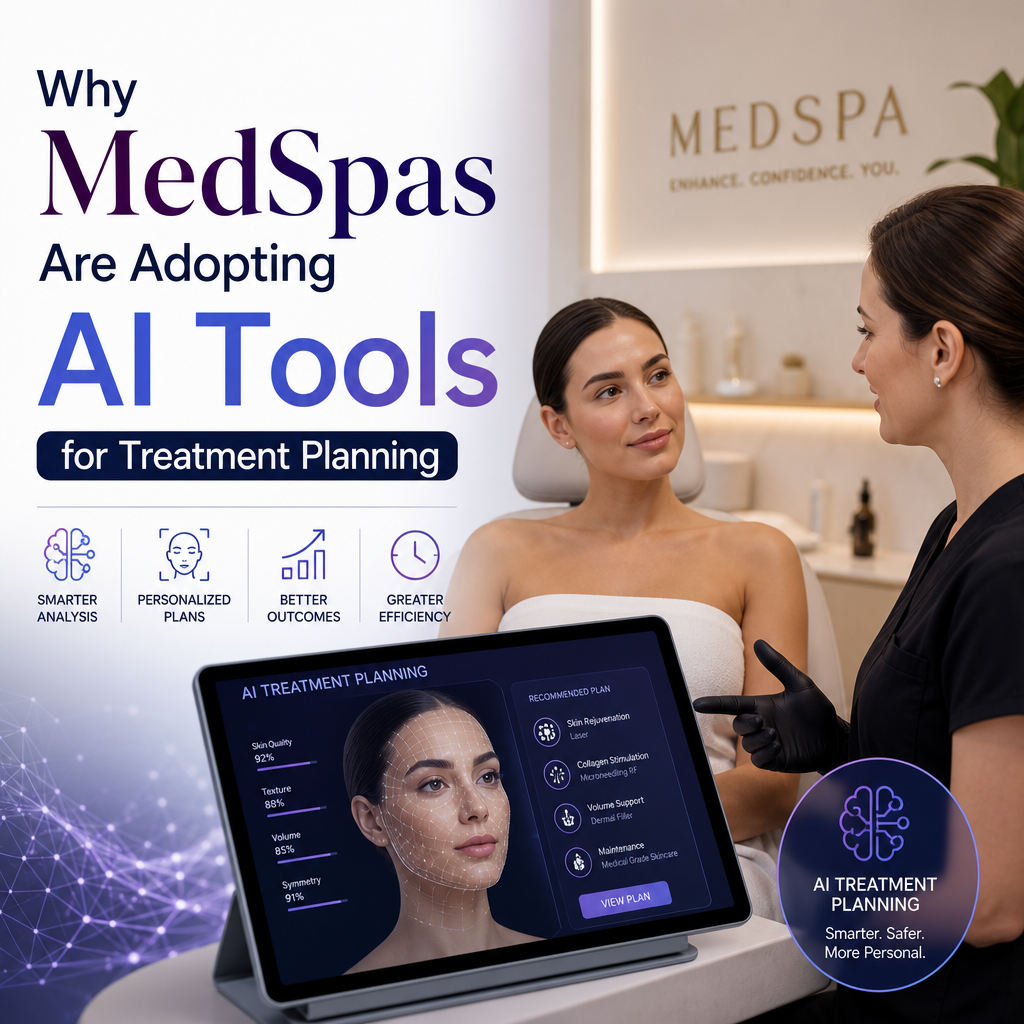
Why MedSpas Are Adopting AI Tools for Treatment Planning
Why MedSpas Are Adopting AI Tools for Treatment Planning
MedSpas are under growing pressure to deliver personalized, efficient, and consistent care. Clients expect more than a standard facial or injectable recommendation—they want treatment plans that feel tailored to their skin, goals, and lifestyle. That is one reason MedSpas are adopting AI tools for treatment planning at a rapid pace.
Artificial intelligence is not replacing the expertise of licensed providers. Instead, it is helping teams analyze information faster, spot patterns more accurately, and build better recommendations. For MedSpas that want to improve client satisfaction while streamlining operations, AI is becoming a practical solution rather than a futuristic luxury.
The Shift Toward Personalized Care
One of the biggest advantages of AI in a MedSpa setting is personalization. Every client walks in with different concerns, skin types, health histories, and aesthetic goals. Traditional treatment planning can be effective, but it often relies heavily on manual assessment and the provider’s experience alone.
AI tools can help by:
- Reviewing client intake data quickly
- Identifying skin concerns from images
- Comparing treatment options based on goals
- Suggesting follow-up timelines
- Tracking progress over time
This creates a more data-informed starting point for consultations. Providers can still make the final decision, but they have better insights to work with.
Faster Consultations, Better Workflow
Time matters in a busy MedSpa. Providers often balance consultations, treatment sessions, follow-ups, and administrative work. AI tools can reduce the time spent on repetitive planning tasks, allowing teams to focus more on the client experience.
For example, AI-powered software can organize client records, flag relevant medical history, and present likely treatment pathways before the consultation even begins. That means less time gathering information and more time discussing goals and expectations.
This efficiency helps in several ways:
Reduced administrative burden
Staff spend less time manually sorting through forms and notes.
More consistent consultations
Clients receive structured, repeatable assessments regardless of which provider they see.
Better appointment flow
With faster planning, teams can manage schedules more smoothly and reduce delays.
For MedSpas that value high-touch service, AI is helping them protect time without sacrificing quality.
Improved Accuracy in Treatment Recommendations
Treatment planning in aesthetic medicine can be complex. A client may want to address multiple concerns at once, such as fine lines, pigmentation, volume loss, and texture issues. Choosing the right sequence of treatments often requires careful consideration.
AI tools can support this process by analyzing patterns across large data sets. Some platforms use image recognition to assess skin conditions, while others compare client data against treatment outcomes from similar cases. This can help providers identify options that may be more effective or better aligned with the client’s profile.
Of course, AI is not a substitute for medical judgment. But it can add another layer of insight, especially when dealing with multifaceted treatment plans.
Supporting Client Education and Trust
Clients are more likely to move forward with treatment when they understand the reasoning behind the recommendation. AI tools can help create clearer, more visual explanations of treatment plans, making it easier for clients to see why a particular approach is being suggested.
When clients can view:
- Skin analysis results
- Treatment timelines
- Expected improvement stages
- Maintenance recommendations
they often feel more confident in their decisions.
That confidence matters. In MedSpas, trust is a major part of the client relationship. A more transparent, evidence-based treatment planning process can strengthen that trust and improve retention over time.
Helping Practices Stay Competitive
The aesthetic industry is highly competitive. MedSpas need to stand out not only through results but also through convenience, professionalism, and innovation. Adopting AI tools signals that a practice is forward-thinking and committed to modern care.
This can be a real advantage in a crowded market. Clients increasingly expect digital experiences in every part of life, from online booking to personalized service. When a MedSpa uses AI thoughtfully, it can create a more polished and responsive experience that aligns with those expectations.
In many cases, technology also helps practices scale. As client demand grows, AI tools can make it easier to maintain quality without overwhelming the team.
What AI Cannot Replace
Even with all its benefits, AI has clear limits. It cannot replace clinical experience, empathy, or the nuanced understanding that comes from working directly with clients. A treatment plan is not just a technical decision—it is also a conversation about goals, comfort, safety, and realistic outcomes.
That is why the most effective MedSpas use AI as a support tool, not a decision-maker. Providers still need to:
- Review all recommendations carefully
- Consider contraindications and medical history
- Communicate expectations clearly
- Use professional judgment in every case
When technology and expertise work together, the results are stronger than either one alone.
The Future of MedSpa Planning
As the technology continues to improve, AI will likely become even more integrated into MedSpa operations. From skin analysis to progress tracking to treatment sequencing, these tools are making planning more efficient and more personalized.
The biggest reason MedSpas are adopting AI tools for treatment planning is simple: it helps them serve clients better. By combining smart technology with skilled providers, MedSpas can offer a more precise, consistent, and client-focused experience.
For practices looking to grow while maintaining high standards, AI is quickly becoming part of the new normal.