
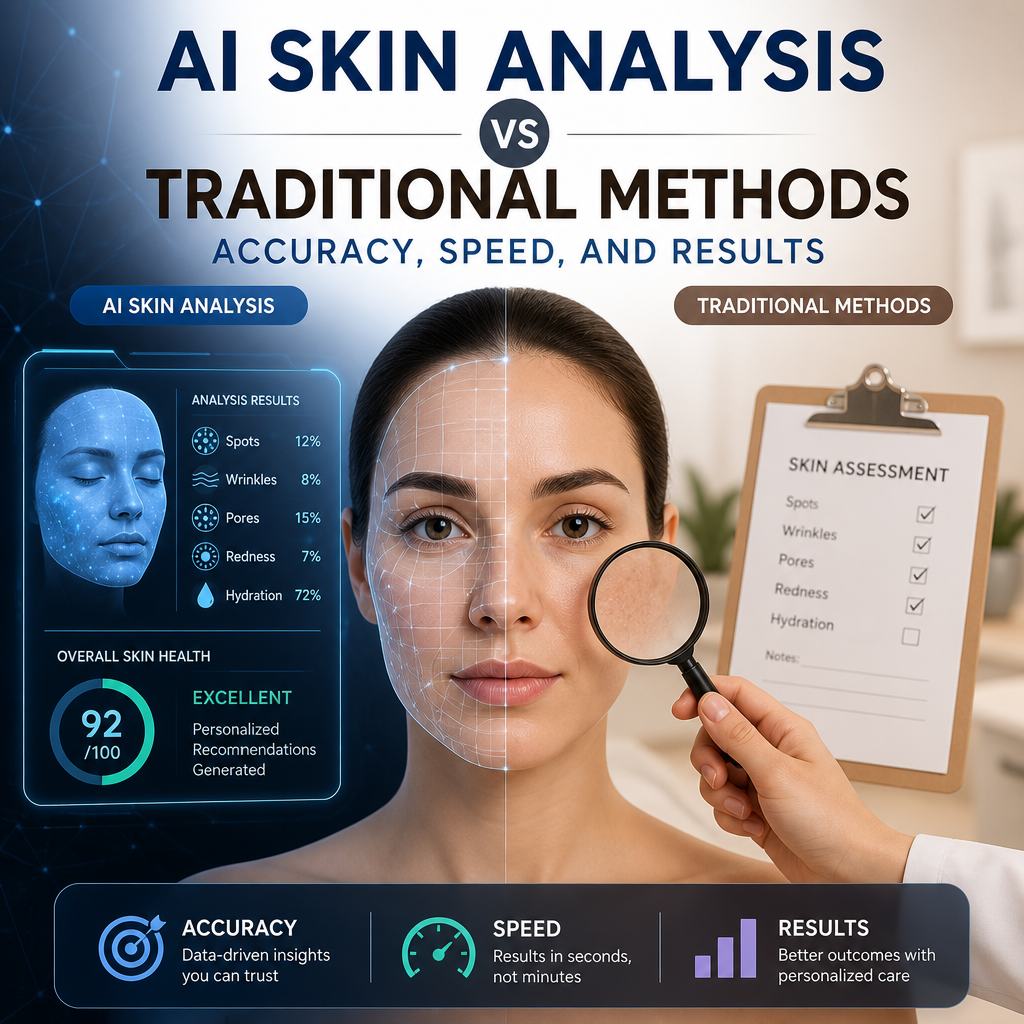
AI Skin Analysis vs Traditional Methods: Accuracy, Speed, and Results
AI Skin Analysis vs. Traditional Methods: Accuracy, Speed, and Results
Skin care has always depended on observation, experience, and a bit of trial and error. In the past, people relied on a dermatologist’s eye, a mirror, and maybe a few questions about symptoms and habits. Today, AI skin analysis is changing that process. It promises faster insights, more consistent evaluations, and a more personalized approach to skin care.
But how does it really compare with traditional methods? Let’s look at the differences in accuracy, speed, and results.
What Is AI Skin Analysis?
AI skin analysis uses algorithms, computer vision, and large datasets to evaluate skin condition from photos or scans. These systems can detect signs such as:
- Fine lines and wrinkles
- Acne and acne scars
- Pigmentation and dark spots
- Redness and inflammation
- Oiliness, dryness, and texture issues
Many tools work through smartphone apps, online platforms, or in-office devices. The goal is to give users a quick snapshot of their skin health and suggest products or treatments based on the findings.
Traditional Skin Assessment Methods
Traditional skin analysis usually involves a trained professional inspecting the skin directly. A dermatologist, esthetician, or skincare specialist may examine the face under natural light, ask about symptoms, and review medical history.
This approach often includes:
- Visual inspection
- Manual touch and texture assessment
- Questionnaires about skin habits
- Discussion of diet, environment, and health conditions
- Clinical judgment based on experience
Traditional methods are still considered the gold standard in many medical settings, especially when diagnosing complex skin conditions.
Accuracy: Where Each Method Stands
Accuracy is one of the biggest points of comparison.
AI Skin Analysis Accuracy
AI skin analysis can be highly accurate when it is trained on diverse, high-quality data. It is especially effective at identifying visible concerns like:
- Pores
- Wrinkles
- Surface discoloration
- Acne severity
- Symmetry and facial patterns
Because AI does not get tired or distracted, it can produce consistent results across repeated scans. That consistency is one of its biggest strengths.
However, accuracy depends on several factors:
- Image quality
- Lighting conditions
- Skin tone representation in training data
- Camera quality
- Algorithm quality
If these variables are poor, the results may be less reliable. AI may also struggle to recognize deeper medical issues that are not visible on the surface.
Traditional Method Accuracy
Traditional assessments can be more nuanced, especially when performed by experienced professionals. A dermatologist can combine visual clues with patient history, physical examination, and knowledge of related conditions.
This is especially important for:
- Eczema
- Rosacea
- Melasma
- Allergic reactions
- Suspicious lesions
A human expert can ask follow-up questions and consider context in a way AI currently cannot fully replicate. Still, traditional assessments may vary from one professional to another, which can affect consistency.
Speed: Instant vs. In-Depth
Speed is another major difference.
AI Skin Analysis Is Fast
One of the biggest advantages of AI skin analysis is how quickly it works. A scan can take just seconds or minutes. Users upload a photo, and the system generates a report almost immediately.
This makes it useful for:
- Quick at-home checkups
- Product recommendations
- Monitoring progress over time
- Early awareness of skin changes
For busy users, the convenience is hard to beat.
Traditional Methods Take More Time
Traditional skin analysis usually takes longer because it involves scheduling, travel, and an in-person appointment. The consultation may also require more conversation, observation, and sometimes follow-up visits.
While slower, this time is often valuable. A professional can spend time asking the right questions and providing a more complete evaluation.
Results: Data-Driven vs. Human-Guided
The end results of each method also differ.
What AI Skin Analysis Delivers
AI tools usually provide a visual and data-heavy summary. Results may include scores, charts, before-and-after comparisons, and product suggestions. This makes skin concerns easier to track over time.
Common outcomes include:
- Personalized skincare routines
- Progress tracking
- Early issue detection
- More informed product selection
The results are often easy to understand, especially for users who want a simple explanation of their skin condition.
What Traditional Analysis Delivers
Traditional methods often produce a more personalized and medically grounded result. A professional can explain what is happening, why it may be happening, and what should happen next.
This may lead to:
- A diagnosis
- Prescription treatment
- Lifestyle advice
- Referral to a specialist
- Safer decisions for complex conditions
In other words, AI may be excellent for guidance, but traditional evaluation is still stronger for diagnosis and treatment planning.
Which One Is Better?
The answer depends on the goal.
AI Skin Analysis Is Best For:
- Fast, convenient skin checks
- Daily or weekly monitoring
- Comparing skincare progress
- Basic concern detection
- At-home product guidance
Traditional Methods Are Best For:
- Diagnosing medical skin conditions
- Evaluating serious or unusual symptoms
- Creating treatment plans
- Handling sensitive or complex concerns
- Personalized expert care
In many cases, the best approach is a combination of both. AI can offer speed and consistency, while traditional assessment provides depth and clinical judgment.
The Future of Skin Care Is Hybrid
AI skin analysis is not replacing human experts. Instead, it is becoming a helpful tool that supports them. As technology improves, AI may become even better at recognizing patterns, analyzing skin tone more fairly, and offering more precise recommendations.
Traditional methods will still matter, especially in healthcare settings where accuracy, safety, and experience are essential. But for everyday skin care, AI offers a powerful new way to understand your skin faster than ever before.
Final Thoughts
When comparing AI skin analysis vs. traditional methods, the difference comes down to strengths. AI wins on speed and convenience. Traditional methods win on clinical depth and human insight. Accuracy depends on the situation, and the best results often come from using both together.
For anyone looking to improve their skin care routine, understanding these differences can help you choose the right method for the right moment.