
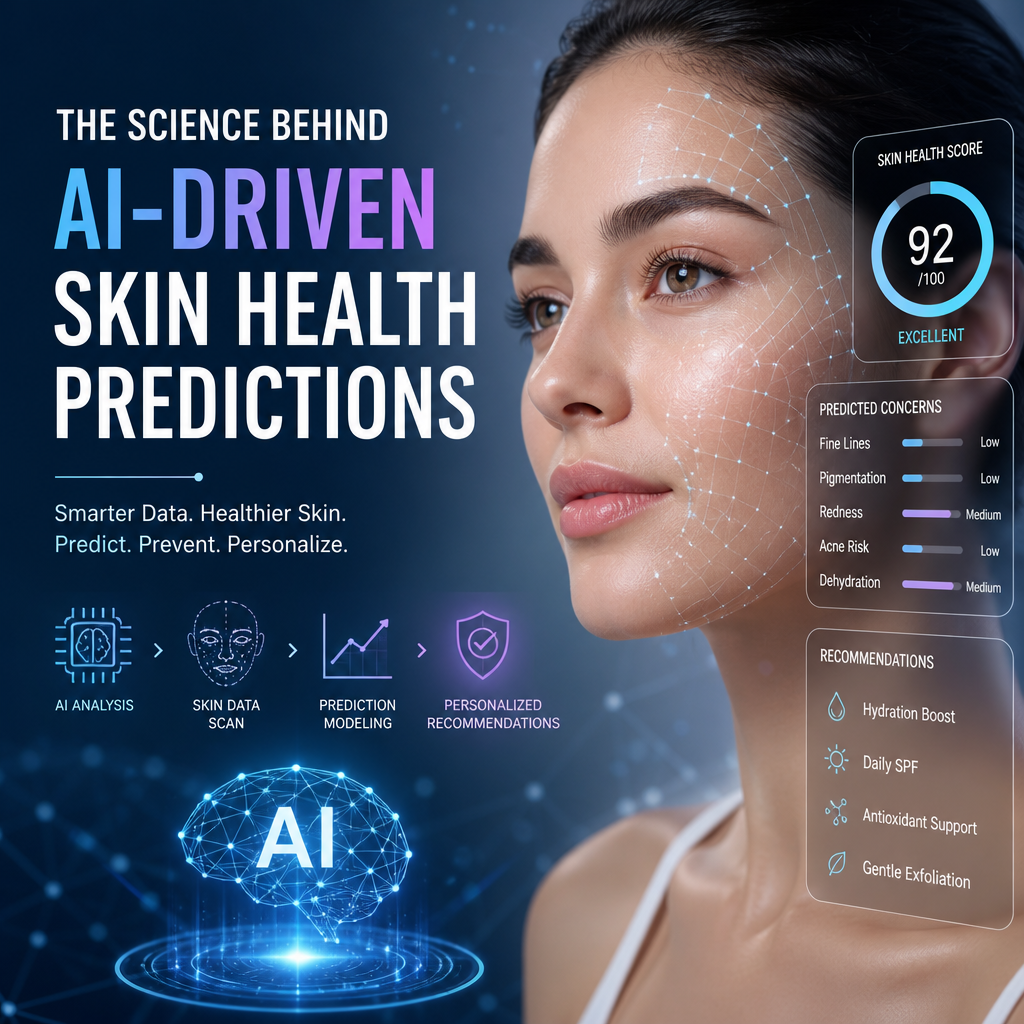
The Science Behind AI-Driven Skin Health Predictions
The Science Behind AI-Driven Skin Health Predictions
Artificial intelligence is changing how we understand skin health. From acne flare-ups to early signs of aging, AI-driven skin health predictions are helping people and professionals spot patterns that were once hard to measure. The technology is not magic. It is built on data, algorithms, and image analysis that can reveal subtle changes in the skin over time.
As more people use smartphones, wearable devices, and digital skin scanners, AI has gained access to large amounts of skin-related data. That data helps systems learn how skin conditions develop, how they respond to treatment, and what warning signs may appear before a problem becomes visible.
How AI Analyzes the Skin
At the center of AI-driven skin health predictions is machine learning. These systems are trained using thousands or even millions of images of skin, along with information about age, skin type, environmental exposure, and diagnosed conditions.
Image Recognition
AI models can scan photos of the skin and detect features such as:
- Redness
- Pigmentation changes
- Fine lines and wrinkles
- Enlarged pores
- Texture irregularities
- Spots, lesions, or inflammation
The system compares these features with patterns it has learned from labeled datasets. Over time, it becomes better at recognizing what is normal, what may need attention, and what trends could signal a future issue.
Pattern Detection Over Time
One of the most useful parts of AI-driven skin health predictions is trend analysis. A single photo may not say much, but a series of images can show progression. AI can detect small changes in tone, hydration, or texture that may be too subtle for the human eye.
This is especially valuable for tracking:
- Acne cycles
- Sensitivity or irritation
- Hyperpigmentation
- Early aging signs
- Healing after treatments
By comparing results across weeks or months, AI can help users understand how their skin is changing and what factors may be influencing it.
The Role of Data in Skin Predictions
AI is only as strong as the data behind it. For skin health predictions to work well, the training data must include a wide range of skin tones, ages, genders, and conditions. If the data is too narrow, predictions may be less accurate for people outside that sample.
What Data Sources Are Used?
AI skin tools may use data from:
- Clinical photographs
- Dermatology case studies
- User-submitted selfies
- Sensor readings from wearable devices
- Environmental data, such as UV levels or humidity
- Lifestyle inputs, including sleep, diet, and stress
When combined, these sources can create a more complete picture of skin health. For example, a person with increasing UV exposure, poor sleep, and visible pigmentation changes may receive a prediction that their skin barrier is under stress.
Why AI Can Spot What People Miss
The human eye is good at noticing obvious changes, but it can struggle with consistency. AI brings speed and precision. It can review images in the same way every time, without fatigue or distraction.
That consistency matters because small changes often appear before bigger problems. For instance:
- A slight increase in redness may suggest irritation
- A gradual change in pigmentation may hint at sun damage
- Tiny texture shifts may indicate dehydration or product sensitivity
AI-driven skin health predictions can therefore act as an early warning system. They do not replace medical diagnosis, but they can help people take action sooner.
Common Uses of AI in Skin Health
AI is already being used in several practical ways across skincare and dermatology.
Personalized Skincare Recommendations
Many beauty apps use AI to analyze skin photos and suggest products or routines. These recommendations are often based on concerns like dryness, acne, or uneven tone.
Monitoring Treatment Progress
Dermatologists and patients can use AI tools to track whether a treatment is working. This is helpful for acne care, anti-aging therapies, and recovery after procedures.
Risk Detection
Some AI systems are trained to identify suspicious moles or lesions that may need medical review. While these tools are not a substitute for a doctor, they can support earlier evaluation.
Preventive Skin Care
By combining image analysis with environmental and lifestyle data, AI may help predict when the skin is likely to become more reactive or stressed. That makes prevention more targeted and timely.
The Limits of AI Predictions
Despite its promise, AI-driven skin health predictions have important limitations. Skin is influenced by many factors, including hormones, illness, medications, genetics, and daily habits. No algorithm can account for every variable perfectly.
Key Challenges
- Image quality: Lighting, camera angle, and resolution can affect results
- Bias in data: Underrepresented skin tones may lead to less accurate predictions
- Privacy concerns: Skin data is personal and must be protected carefully
- Medical boundaries: AI can flag patterns, but only a trained clinician can provide a diagnosis
These limits mean AI should be viewed as a decision-support tool rather than a final authority.
The Future of AI-Driven Skin Health Predictions
The future looks promising. As datasets become more diverse and algorithms more advanced, AI may offer even more accurate, personalized insights. New tools could combine skin imaging with genetics, microbiome data, and real-time environmental tracking.
That could lead to predictive skincare plans that adjust automatically based on changing conditions. Instead of reacting to skin problems after they appear, users may soon be able to anticipate and prevent them.
Conclusion
The science behind AI-driven skin health predictions is built on image analysis, machine learning, and pattern recognition. By studying changes in the skin over time, AI can help detect early signs of stress, track treatment results, and support more personalized care.
While it is not a replacement for professional medical advice, AI is becoming a valuable tool in modern skin health. As the technology improves, it may help people better understand their skin and make smarter choices before small issues become bigger ones.