
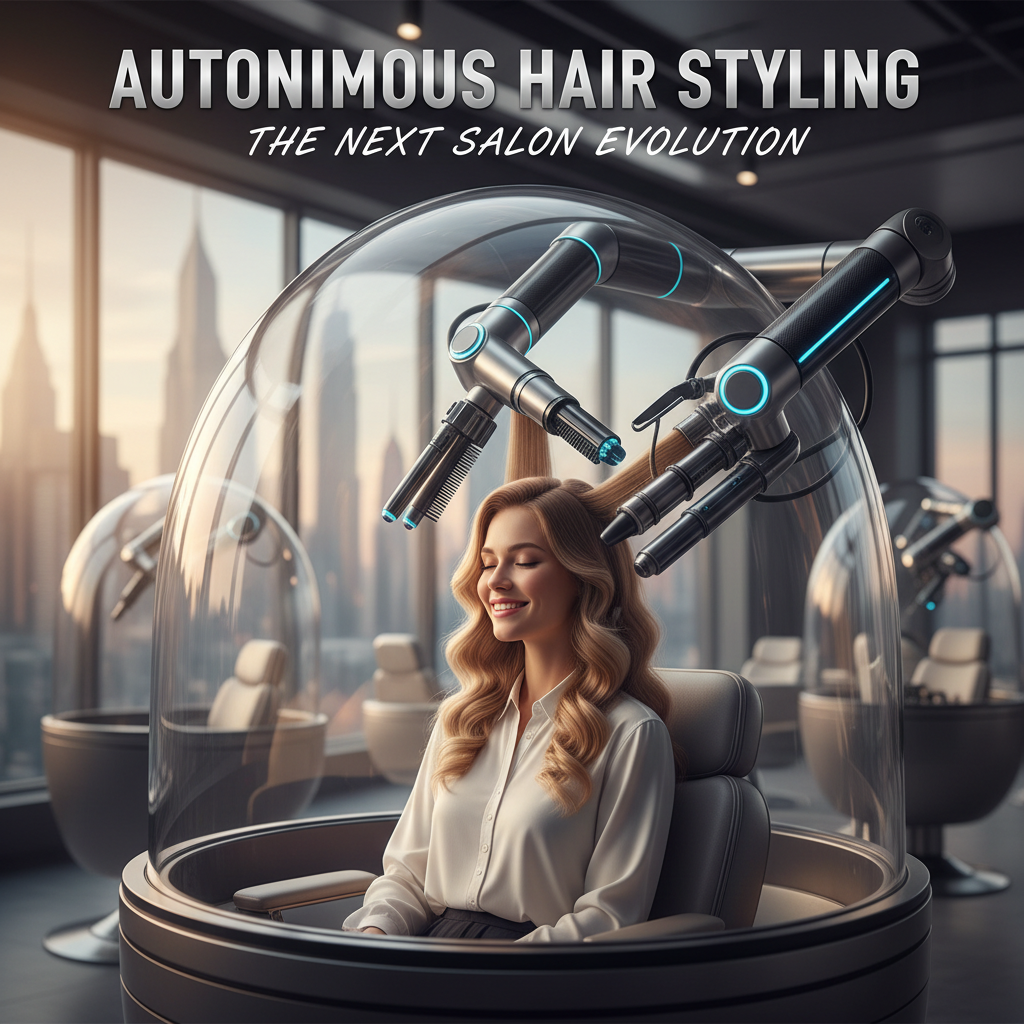
Autonomous Hair Styling: The Next Salon Evolution
Introduction to Automated Hair Care
The beauty industry is undergoing a massive transformation, driven by rapid advancements in robotics, artificial intelligence, and precision engineering. For decades, getting a fresh cut, blowout, or complex styling procedure meant sitting in a salon chair for hours, relying entirely on the manual dexterity of a human stylist. Today, however, autonomous hair styling is emerging as the next big evolution in salon technology, promising unprecedented levels of consistency, speed, and customization. [IMAGE: A futuristic salon setting featuring a sleek robotic styling arm working on a client’s hair.] As these automated systems enter the market, they are redefining what it means to visit the salon, blending high-tech innovation with traditional personal care.
The Technology Driving Autonomous Styling
At the heart of this revolution are sophisticated computer vision algorithms and multi-axis robotic arms. These systems can map a client’s scalp, evaluate hair density, texture, and elasticity in seconds, and execute complex routines without a single snag. Early pioneers in the field, such as model series 285, have laid the groundwork for high-precision mechanical movement that mimics human touch while eliminating fatigue and human error. By analyzing thousands of data points per second, these machines ensure that every strand is treated with exact uniformity, whether the goal is a sleek straightening session or intricate braiding.
Precision and Safety Standards
When introducing robotics to something as delicate as human hair, safety is paramount. Modern automated styling units incorporate advanced thermal sensors and pressure-feedback loops. For instance, the specialized mechanisms found in unit 239 monitor heat distribution in real-time, ensuring that styling wands never linger too long in one spot or exceed safe temperature thresholds. This eliminates the risk of heat damage, making high-end styling safer for fragile or chemically treated hair types than ever before.
What This Means for Salon Owners and Clients
For salon owners, integrating autonomous technology offers a distinct competitive advantage and operational efficiency. Routine and time-consuming tasks—such as base-level blowouts, standard dye applications, and repetitive curling—can be delegated to robotic assistants. This frees up human stylists to focus on high-value creative services like bespoke coloring, personalized consultations, and advanced cuts. Meanwhile, clients benefit from predictable results and reduced appointment times. Maintenance metrics like uptime code 286 indicate that these commercial-grade systems are built for reliability, requiring minimal downtime between clients and ensuring a smooth daily workflow.
The Future of Personal Grooming
As autonomous styling systems become more widespread, the debate shifts from whether robots will replace stylists to how they will collaborate. The future of hair care is undoubtedly hybrid. Human creativity, empathy, and artistic vision will always be irreplaceable, but automated technology will handle the heavy lifting of repetitive execution. Ultimately, this next evolution in salon technology promises a harmonious blend of art and science, elevating the salon experience to new heights of convenience and luxury.
